


Seminaras „Kaip užtikrinti mokslinių tyrimų sąžiningumą, atsižvelgiant į dirbtinio intelekto technologijų plėtrą“
- Pradžia: 2026-10-22 15:00
- Pabaiga: 2026-10-22 19:00
Kviečiame š. m. spalio 22 d. dalyvauti išskirtiniame seminare ir išgirsti naujausią ir aktualiausią informaciją jums.
AI-THOS – tai 30 mėnesių trukmės „Erasmus+“ projektas, kurio metu šeši partneriai iš Lenkijos, Graikijos, Lietuvos ir Slovėnijos parengė mokymo medžiagą ir nuotolinius kursus, skirtus dėstytojams ir studentams.
Renginio tikslas – supažindinti dėstytojus ir studentus su projekto metu parengta mokomąja medžiaga ir jos praktinio taikymo studijų procese galimybėmis. Renginio metu bus pristatyti nuotoliniai kursai, skirti atsakingam ir etiškam dirbtinio intelekto naudojimui akademinėje aplinkoje, aptariant tokias temas, kaip akademinis sąžiningumas, dirbtinio intelekto naudojimo etinės dilemos, atsakomybė, skaidrumas ir kritinis DI sugeneruoto turinio vertinimas.
Dėstytojai ir studentai susipažins su konkrečiomis mokymo(si) užduotimis, praktiniais pavyzdžiais ir refleksijos metodais, kuriuos galės pritaikyti savo dėstomuose dalykuose, ugdydami studentų gebėjimą atsakingai naudotis dirbtinio intelekto technologijomis.
RENGINIO PROGRAMA
15.00–16.30 val. nuotolinis seminaras apie AI-THOS dėstytojams Kaip užtikrinti mokslinių tyrimų sąžiningumą, atsižvelgiant į dirbtinio intelekto technologijų plėtrą. VU Filosofijos fakulteto docentas dr. Miroslavas Seniutis pristatys internetinių kursų dalį dėstytojams; dr. Rima Žilinskaitė supažindins dėstytojus su studentams skirta internetinio kurso dalimi ir jos medžiaga, kurią dėstytojai galėtų naudoti dirbdami su studentais.
17.00–18.30 val. kontaktinis seminaras studentams (FSF 209 aud.), kurio metu dr. Rima Žilinskaitė pristatys internetinio kurso dalį studentams ir praktiškai išbandys dalį jo medžiagos.
18.30–19.00 val. seminaro aptarimas ir diskusija.
 |
Bendrai finansuojama Europos Sąjungos lėšomis (Nr. 000170392) |



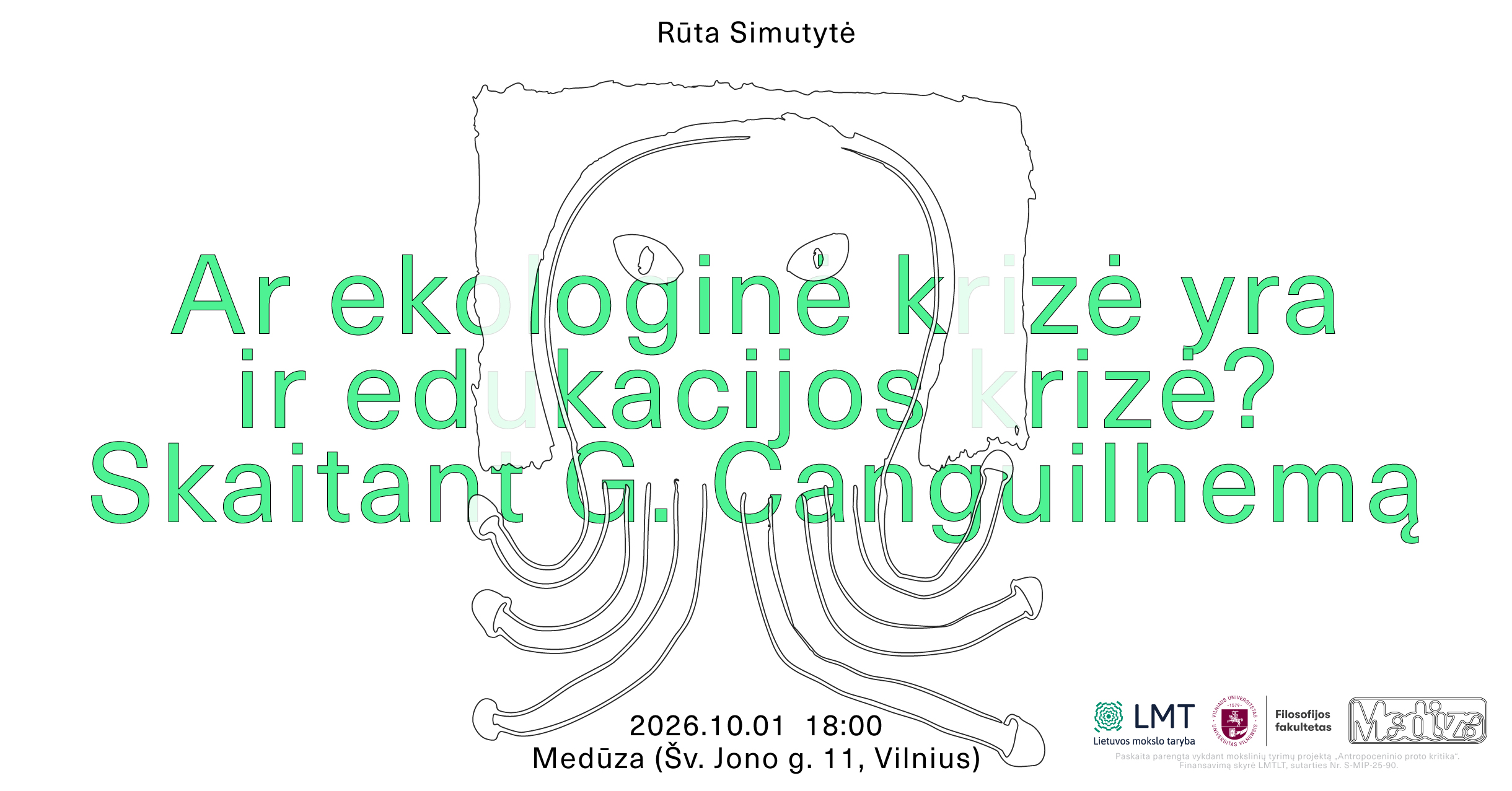 Šį ketvirtadienį, spalio 1 d. 18 val. LDS meno bei kultūros erdvėje „Medūza“ vyks Vilniaus Universiteto Filosofijos fakulteto doktorantės Rūtos Simutytės paskaita „Ar ekologinė krizė yra ir edukacijos krizė? Skaitant G. Canguilhemą“. Ši paskaita – tai mokslinių tyrimų projekto „Antropoceninio proto kritika“ dalis.
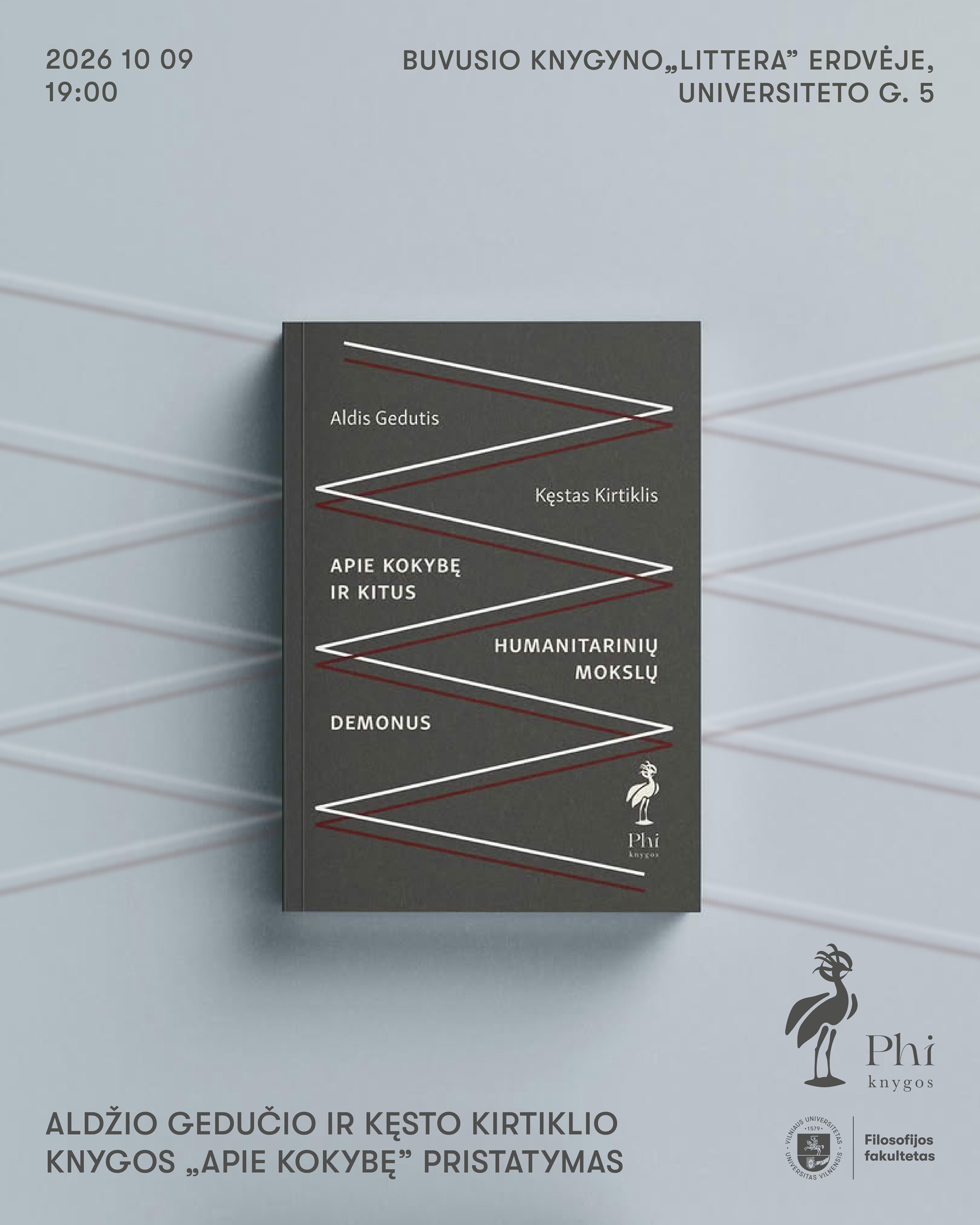 Maloniai kviečiame į Vilniaus universiteto (VU) Filosofijos fakulteto docento dr. Kęsto Kirtiklio ir Klaipėdos universiteto docento dr. Aldžio Gedučio knygos „Kokybė ir kiti humanitarinių mokslų demonai“ pristatymą – spalio 9 d., penktadienį, 19 val., buvusio „Littera“ knygyno erdvėje (Universiteto g. 3, Vilnius).