


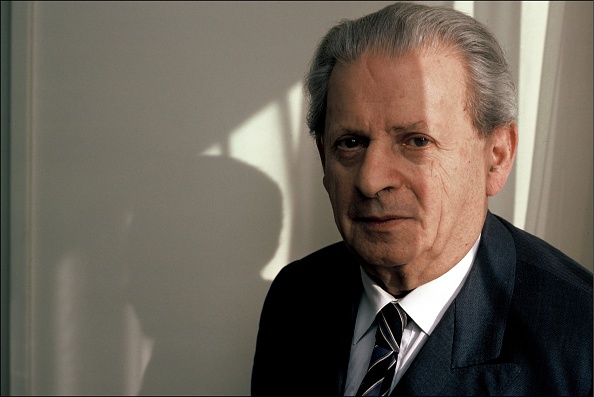
 How to teach philosophy has always been one of philosophy’s central questions. In person, in some sense, but how precisely, and why? The traditional answers usually rely on distinguishing between opinion and knowledge and aligning this epistemological distinction with an ontological-metaphysical distinction between appearance and reality: truth, based in the real, can be taught. Socrates, seeking definition, interrogated his interlocutors face-to-face; Plato established an Academy and published Dialogues; Aristotle set up a Lyceum and published his lectures. Levinas calls for a fundamental reorientation of intelligibility, finding its source not in knowledge and being but in moral responsibility, in ethics. Levinas, throughout his adult life, was a teacher, from 1930 at a Jewish school in Paris through to the 1980s, when, after WWII, he became Director of the same school, and for fifteen years, from 1961 to 1976, he was also a French university professor. His life and thought are devoted to teaching as an integral part of ethics. “Teaching,” Levinas wrote at the start of Totality and Infinity (1964), “is not reducible to maieutics; it comes from the exterior and brings me more than I contain. In its non-violent transitivity, the very epiphany of the face is produced.”
By close reading and group discussion of selected texts by Levinas devoted explicitly to the question of teaching, the 2026 LPSS aims to clarify and critically appraise the nature and role of teaching in Levinas’s ethics.
Date: June 29 to July 3, 2026
Location: Vilnius University, Vilnius, Lithuania
To apply:
Fifteen scholars of philosophy and/or educational sciences – professors and graduate students – will be accepted to participate in this round-table seminar.
To apply, send:
(1) A detailed résumé, curriculum vitae, or brief biography with contact information for two professional references;
(2) An application essay which should address your interest, both academic and personal, in the subject to be studied; qualifications and experiences that equip you to do the work of the seminar and to make a contribution to a learning community.
Send these as email attachments to or
University teachers and graduate students in Philosophy and related Humanities, as well as Pedagogy, are encouraged to apply.
Applications are reviewed on a rolling basis from now until the deadline, until all 10 places are filled. A limited number of auditors will also be accepted. Please indicate if you are applying as an auditor.
Application deadline: April 15, 2026.
All applicants will be notified no later than May 1, 2026.
There is no registration fee. The LPSS provides no financial support.
LPSS meets at Vilnius University, Faculty of Philosophy 10:00 to 12:00, 14:00 to 17:00 Monday through Friday.
Director: Prof. dr. Richard A. Cohen, University of Buffalo (SUNY), USA & Vilnius University, Lithuania;
Asst. Directors: Prof. dr. James McLachlan, Emeritus, Western Carolina University, USA;
Assoc. prof. dr. Jolanta Saldukaityte, Vilnius University , Lithuania
More information:
The Levinas Center for Philosophical and Religious Studies at Vilnius University
Levinas Philosophy Summer Seminar Series at University at Buffalo, USA
Facebook: Levinas Philosophy Summer Seminar
Seminar is a part of the project „Assessment of Philosophy Teaching in High School Education“, Nr. P-EDU-23-19. This research No. P-EDU-23-19 is co-funded by the European Union (the project „Breakthrough in Educational Research“ No 10-044-P-0001) under the 1st April 2025 Agreement with the Research Council of Lithuania) and the 15th April 2025 Joint Activity Agreement with Vilnius University.
