


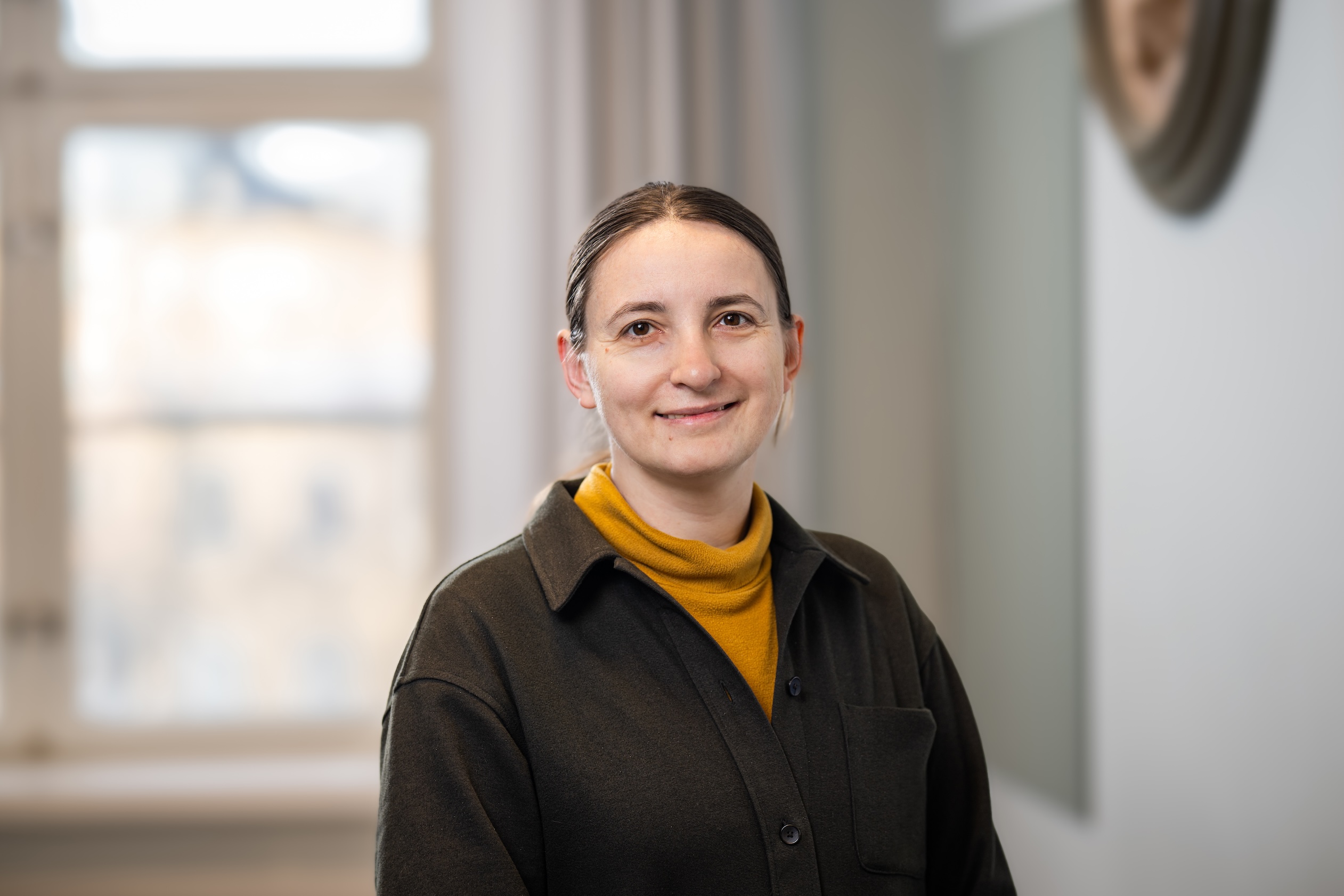
 2026 m. vasario 25 d. 17 val. kviečiame jus į atvirą paskaitą, kurią skaitys dr. Kateryna Zorya (Švedijos gynybos universitetas / Försvarshögskolan). Paskaita vyks anglų kalba, jos tema – „Religion and State in the Russian-Ukrainian War: National Strategies of Aggression and Defense“.
Prie paskaitos prisijungti galite pasinaudoję šia nuoroda – https://bit.ly/4qVqnq9
About the lecture
The control of religious organisations and, through them, their members has been an important tool with which Russia has historically carried out acts of both external aggression and internal policing, especially by using the so-called “traditional religions” as networks of state agents. As such, religion has played a role in the Russian-Ukrainian war, both in the preparation phase and the active phase. In the preparation phase, Russia attempted to exert “soft power” control of Ukrainian discourses and believers through the Russian Orthodox Church, using anti-cult narratives to minimise religious diversity and bring more believers under the control of one easily coopted institution. To counteract this strategy, Ukraine has promoted religious diversity internally, with both scholars of religion and religious practitioners taking part in building robust interfaith administrative structures and dialogues. In the phase of active war, Russia has activated its traditional religions for purposes of propaganda and for organising support for the military. Ukraine’s practitioners of religion have also provided important support to the Ukrainian military and civilian society, for example, through the institution of chaplaincy, but crucially, there is no overarching state control or oversight. In essence, where Russia has a policy of maintaining major traditional religions as networks to be activated, Ukraine has maintained a diversity of religious movements and relies on extant social ties between religious groups and civil society to foster social cohesion.
About the speaker
Kateryna Zorya is a historian of religion who specialises in contemporary Ukrainian esotericism and is a member of the Ukrainian Workshop for the Academic Study of Religion (WASR) and the European Society for the Study of Western Esotericism (ESSWE). In her recent work at the Swedish Defence University (Försvarshögskolan), she has focused on the sociological effects of war in Ukrainian society, primarily examining its impact on Ukrainian education and informal networks of mutual support. As a WASR, she works on the intersection between religion and national security, examining the use of religion in discourses of the Russian-Ukrainian war.